Brief biography of Richard Hirsh
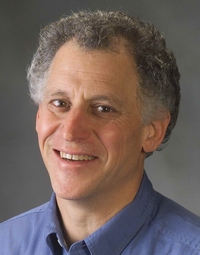
Richard Hirsh is a professor of history of science and technology at Virginia Tech. He has an unusual multidisciplinary background, having earned a master’s degree in physics and a Ph.D. in the history of science from the University of Wisconsin-Madison.
Though he previously wrote about astronomical research conducted from outer space (published as Glimpsing an Invisible Universe in 1983), Richard turned his attention to the recent history of electric utilities after serving as chair of a citizens’ committee that created a new rate structure for the Gainesville (Florida) Regional Utilities System. In 1989, he published Technology and Transformation in the American Electric Utility Industry, which argues that technological, managerial, and cultural factors contributed significantly to the industry’s problems in the 1970s and 1980s. He has also consulted for the Pacific Gas and Electric Company, co-authoring a management history of the utility’s “ACT-squared” energy-efficiency R&D project.
In 1999, he published Power Loss: The Origins of Deregulation and Restructuring in the American Electric Utility System. He continues to write and speak on policy-related issues involving electric power systems, renewable energy, and energy efficiency, while working with engineers, scientists, and policy analysts at Virginia Tech and other universities.
In an unusual twist for someone who focuses largely on contemporary policy-oriented concerns, Richard recently completed a book on the largely neglected—but relatively successful—efforts to deliver power to farms before the federal government created the Rural Electrification Administration in 1935. Published in 2022, Powering American Farms: The Overlooked Origins of Rural Electrification (Johns Hopkins University Press) won the Institute of Electrical and Electronics Engineers (IEEE) Middleton History Award, given for a book “that both exemplifies exceptional scholarship and reaches beyond academic communities toward a broad public audience.”
An abridged curriculum vitae can be read from here.